Sunday, November 20, 2016

To Be Made Whole


   As Christ was on his way to Jerusalem during his ministry, he was met by ten lepers.  They said to Christ:
"'Jesus, Master, have mercy on us.'  And when he saw them, he said unto them, 'Go shew yourselves unto the priests.'  And it came to pass, that, as they went, they were cleansed.  And one of them, when he saw that he was healed, turned back, and with a loud voice glorified God, And fell down on his face at his feet, giving him thanks: and he was a Samaritan.  And Jesus answering said, 'Were there not ten cleansed? but where are the nine?'  There are not found that returned to give glory to God, save this stranger.  And he said unto him, 'Arise, go thy way: thy faith hath made thee whole.'" (Luke 17:13-19, quotations added)
   This concept of becoming whole has been on my mind lately.  What does it mean to be made whole and how do we achieve this?  Christ commands us that we must be perfected through Him, but is this how we become whole?  Though Christ does want us to use the Atonement and strive for perfection through Him, becoming whole is something we must work on at a personal level.  When Christ asks us to give ourselves unto Him, he expects all of us to be presented.  Just as when you ask for an apple, you don't expect only half an apple.  However, being made whole as a human involves many aspects of our lives becoming whole, not just one.  When you want an Apple iPhone, you don't expect half a screen, a whole processor, one of four functioning buttons, and three fourths of the electrical components.  To be made whole, we must first take a step back and consider the main aspects of life: physical, mental, spiritual, emotional, social, and intellectual.

   Physical

   "Know ye not that ye are the temple of God, and that the Spirit of God dwelleth in you?  If any man defile the temple of God, him shall God destroy; for the temple of God is holy, which temple ye are." (1 Corinthians 3:16-17)

   In a world that seems to continually become more and more corrupt we start hearing many claims that I imagine make God disappointed.  One of those claims is "my body my choice".  Obviously we are in control of our body (most the time) so how could this claim be false?  From a logical standpoint, you don't own something until you purchase it, or it is given to you.  I believe that a common misconception is that God gave us our bodies, thus it is now ours, but throughout the scriptures God reminds us that our bodies are a possession of God.  "Know ye not that your body is the temple of the Holy Ghost which is in you, which ye have of God, and ye are not your own?" (1 Corinthians 6:19)

  God has loaned us our bodies, and he has the power to take them away.  Until the resurrection, our bodies and our spirits are not inseparable.  God gives us many gifts throughout our lives, and he expects us to take care of each one.  To become physically whole, we must also break this down into various pieces.  Among other things, we must treat our bodies right, we must learn to overcome physical lusts, and we must avoid flaunting our bodies and avoid immodesty.  Through various means, not only can we become healthy, but we can treat our bodies as a temple and become whole.

   Mental

   One major aspect of becoming mentally whole is ensuring your mind is clear and strong.  Alcohol and other drugs affect our physical health negatively, but they also hurt and retard our mental abilities.  With our bodies, God gave us an amazing brain, more complex, more creative, and more able than any computer in the world.  These innate abilities can only be fully harnessed through mental clarity and mental strength.  I believe another aspect also includes mental attentiveness and awakeness.  We must be aware of what is going on around us, pay attention to the people in our lives, and be sincere in everything we do.

   Spiritual

   In church we hear hundreds if not thousands of different ways to become spiritually strengthened.  Often we focus too much on spiritual "strength" and neglect other aspects of our lives.  With that said, it is as equally important as any other category and must be a high priority.  Being spiritually whole consists of coming closer to God through church, prayer, and sincere scripture study, being morally clean in thought and in action, not judging others, and serving others in any and every aspect we can.  "For to be carnally minded is death; but to be spiritually minded is life and peace." (Romans 8:6)

   These first three sections of becoming whole can be summed up in the last section of the scout oath: "To help other people at all times; to keep myself physically strong, mentally awake, and morally straight."

   Emotional

   Being emotionally whole doesn't only involve our own emotional strength and stability, but being emotionally aware of those around us.  For our own emotional strength we must learn to feel love for our fellow men, oust hate in our lives, and avoiding taking offense from those who are also imperfect.  The idea of political correctness was invented to protect those who are emotionally unstable and, while we must be aware and loving toward those who may not have sufficient emotional strength, we must also strive to keep our own emotions in check, and not force them onto those with whom we disagree.  "Master, which is the great commandment in the law?  Jesus said unto him, Thou shalt love the Lord thy God with all thy heart, and with all thy soul, and with all thy mind.  This is the first and great commandment.  And the second is like unto it, Thou shalt love thy neighbour as thyself." (Matthew 22:36-39)

   Social

This is the topic in which I believe the most confusion in our society exists.  Hypocrisy, discrimination, one-sidedness are just a few problems that exist in our society, most of which surface amongst debates and discussions.  The best way to build social wholeness is to consistently and constantly examine and assess our social interactions.  Was I hypocritical?  Was I unfair?  Did I listen and consider differing opinions.  The easiest way to depict an image of social incompleteness is to think of how one-sided we often may be.  Just as everything has at least 2 sides, to be socially whole we must not be one-sided.

   Intellectual

   God wants us to be educated in all matters.  He wants us to strive for knowledge to benefit us, our families, and those around us.  The technologies and conveniences of our generation have been brought about by those who took the time and put forth the effort to better themselves to better society.  Our intellect will help us get jobs, deal with life, and solve problems.  When you are taking a test, God won't give you the answers you seek just because you are spiritual, rather he will help you if you put forth the effort to study, and to know for yourself.  Being intellectually whole means being knowledgeable, logical, and always seeking to know more.  "And if a person gains more knowledge and intelligence in this life through his diligence and obedience than another, he will have so much the advantage in the world to come." (Doctrine & Covenants 130:19)

   Becoming whole is not just an achievement of overall improvement, but is a constant for which to work for and strive.  The reservoir of our perfection has a leak and must constantly be filled to help us reach our potential, and to reach heaven.  Only through constant examination and correction can we become whole through our own efforts, and through Christ.  "But the fruit of the Spirit is love, joy, peace, longsuffering, gentleness, goodness, faith, Meekness, temperance: against such there is no law.  And they that are Christ’s have crucified the flesh with the affections and lusts.  If we live in the Spirit, let us also walk in the Spirit." (Galatians 5:22-25)

Sunday, November 13, 2016

The Right to Protest


   If you weren't aware of all the post-election protests, I don't know if I should applaud you for your disconnect from the corrupt media, or to question you for your intentional disconnect with reality.  Regardless, Democrats have taken to the streets to protest the President elect Donald Trump.  When attacked or ridiculed for protesting, the Democrats "cite" the first amendment: "we have the right to protest." I didn't remember there being a right to protest being in the bill of rights so I looked again:


I was right, there is no right to protest in our bill of rights.  What we commonly interpret as "the right to protest" in the first amendment is "the right of the people peaceably to assemble, and to petition the Government for a redress of grievances." Let's dissect this for a moment. First of all, the word "peaceably" should stand out.  Most of the protests have been peaceful, but for those that have become riots, the same claims of "the right to protest" have been used as justification.  The incorrect assumption that a protest or riot is justifiable under our laws if you have a reasoning behind it has emerged.

   Next is the word "assemble".  Gathering in groups for a legal cause is protected under the Constitution; using these gatherings to illegally impede traffic, vandalize property, or disturb the peace is not protected.  Just because you legally assemble doesn't mean that everything you do as an assembly is protected.

   The next examination is in regards to petitions.  This is a way for governing bodies (government, businesses, etc.) to recognize what those under it's reach of influence support or object to.  However, a common misconception is that if a petition reaches a stated or unstated minimum that those whom it is addressed to must accept it and include/regulate it as policy, rule, or law.  A petition for Gary Johnson to be included in the debates reached about 1 million signatures.  To most people, they reached an arbitrary minimum and felt it unfair that Gary wasn't included in the debates because of their petition.  What they didn't understand is, first, their petition is only for recognition, and second, Gary Johnson didn't have the stated minimum of support to be in the debates.  Likewise, Democrats have a petition which as of today (11/13/2016) has approximately 3 million signatures to try and force the electors to switch their vote to Hillary.  This is doing what a petition is meant for, which again is recognition, but the purpose seems to differ.  Even if the petition reaches more signatures than votes Donald Trump got, it doesn't require the government to obey it, rather simply to recognize it.  If Democrats didn't want Trump for President, they should have took more action before the election, not after.

   Finally, let's examine the final piece, "redress of grievances." The point of all of this is when someone has been dealt with unfairly to get recognition of the governing body and to help amplify their voice.  It is to help us solve problems of injustice, not a difference of opinion.  The founding fathers wanted us to have the power to keep those in power in check.  The protests being displayed have nothing to do about solving problems or dealing with injustice because Donald Trump isn't President yet, he hasn't enacted any laws, nor has he had economic effect on anyone not employed by him.  If we interpret the first amendment with it's literal and intended definition, the protests are not protected and not justified, and are illegal.

   "You're just saying this because you disagree with us! Republicans have protested as well!" True but the difference is that most Republicans seem to better understand the Constitution.  The biggest modern Republican protest was "the 9-12 project" initiated by Glenn Beck.  Approximately 1.4 million protestors came before the capital building in Washington DC to protest Obama trying to divide the country.  They felt he was intentionally trying to create hatred between Republicans and Democrats.  They also protested his failing policies and his illegal executive orders.  Following the protest, police reported that no violence was reported during or after the protest, traffic was not impeded, no vandalism was found, and not even the smallest amount of litter was found.  The largest Democratic protest was at the 1968 Democratic National Convention.  Hundreds of thousands of Democrats appeared in Chicago in opposition to Democratic presidential nominees' policies and opinions regarding the Vietnam war.  These protests became violent and required between 10,000-15,000 policemen to dissolve the riots that ensued.  Hundreds were injured and many people were murdered including John F. Kennedy's brother and Martin Luther King Jr.  Though the number of Democratic protestors was presumably less than half of Republicans in their respective protests, violence was completely absent in those of Republicans.  This is not just a comparison between two protests, but a historical trend for the protests of each party.

   I'm all for the rights in the first amendment because I like being able to voice my opinions and opposition to things and people I disagree with.  However, I also believe that our rights shouldn't be abused or they may be taken from us.  You have the right to drive a car if you have a license but that right is taken if you are negligent, use it for illegal purposes, or endanger those around you.  Let us be a tolerant, peaceful people who use logic.  Let us unify as a country and allow our democratic process to lead us to what it may.  If you oppose Trump, do so in a legal, peaceful way, and in the correct situations.  Let's be a smarter people, and help make America great again!

Saturday, November 5, 2016

Voting according to characteristics that matter


   This year we are privileged (sarcasm) with presumably one of the craziest elections in history.  We have the choice between a corrupt criminal in Hillary Clinton, a narcissistic chauvinist in Donald Trump, two candidates who are incompetent in the way government works in Gary Johnson and Jill Stein, and a credential-less, yet smart, moral man in Evan McMullin.  If you read or watch anything political online or in the news it's likely you've seen hundreds of comparisons between candidates, as well as random opinions regarding different candidates.  When choosing who to vote for, however, we have to be able to sift out the useless information thrown at us and decide what is valuable.  In short, we should focus on policy more than personality, yet often we start debating what we view as pros or cons in a candidate's personality.  This should be left out of the discussion.  To start, let's examine the useless information that is thrown at us that we need to disregard.

   Let's get what I consider to be the most illogical argument out of the way: "vote for a winner."  I am absolutely tired of seeing all the polls.  With polls from more liberal networks such as MSNBC and CNN we always see Hillary ahead, in more neutral or conservative networks such as Fox, we see Trump ahead.  Both Donald Trump and Hillary Clinton have put out articles or ads that show their poll numbers that "clearly" show them ahead of their opponent and tell you that you should vote for the expected winner of the election.  Unless you are placing bets it shouldn't matter to you whom the projected winner is.  If we had someone as corrupt and as evil as Hitler running, and somehow he was leading in the polls (sound like any candidate?), would you vote for him? No!  Because I am going to assume that you aren't evil, you don't enjoy murder, and you want what's best for your country.
  
   While vetting Gary Johnson I came across a few people's opinions on his character.  When debating with people against marijuana, the point was brought up that you are much more likely to have a heart attack after smoking marijuana than you would otherwise.  Immediately Gary Johnson grabs his chest and falls to the ground while faking a heart attack.  Someone in the comments of the video said something to the effect of "Gary Johnson just won my vote; I want someone with a sense of humor in the White House." Twitter followers also threw in their similar remarks:

I personally think Barack Obama and Bill Clinton were hilarious Presidents, but this (clearly) in no way helped their ability as a President nor did it affect their policies. Both reflected similar or less effective policies of other Democratic Presidents.  Neither gained more support from Americans AFTER they went in office, and neither were good Presidents for helping the economy, international relations, national security, or really anything.

   Another weightless argument is a candidate's identity, i.e. race, gender, sexual orientation, etc.  Sure, we want to see a variety of people being President, but the only reason why I would consider voting for someone who is black, as opposed to white is if his/her policies are policies that I can agree with MORE than the other candidate. Same thing goes for the opposite situation, as well as any other difference in identity among candidates. If the only candidates available were one male and one female, I would only vote for the female for the purpose of variety if and only if the two candidates’ policies were exactly the same. If I agree with the male candidate's policies more, I will vote for him. If I agree with the female candidate's policies more, I'll vote for her.  This should be obvious but Obama's campaign was trying to get voters based off of Obama being black, and Hillary's campaign is trying to get voters based on her being a female. The quality and policies of a candidate should always trump the identity of a candidate.

   Let's dive into the part of the discussion that should be obvious: the valuable characteristics.  Policy is an obvious one and should be the one we view as most important.  On top of policy, however, are other characteristics that will have a large effect on a candidate's presidency.  Temperament is one that is brought up often, especially when we talk about the President being the Commander-in-Chief.  We don't want someone crazy, or someone with a short fuse to be behind the nuclear missile launch button.  However, if the President says "FIRE!" there is nothing that says that the missiles will undoubtedly be launched.  There is a period of time of discussion with the military general and others before a final decision is made.  The president does not, has not, and will not ever, hold the sole power over nuclear launch protocol. Thus, policy is still weighted more than temperament.


   We also don't want someone who is incompetent behind the button for obvious reasons.  Even if they have a good temperament, their stupidity or lack of logic can also lead to rash, stupid, or knee-jerk decisions.  Just think of Homer the nuclear physicist.

   One characteristic that is overlooked is health.  While Bernie Sanders was running, many were concerned about his health due to his age.  He, however, was very healthy and had doctor's notes to prove it.  The reason why this is important is because the person we choose as President (assuming they are actually going to work and not just play golf or vacation while in office) has to be able to keep up with the demand of job.  Traveling, going to meetings, dealing with middle-of-the-night situations; these things can wear a person down.  If they can't handle it and they get some type of ailment, then there is a period of time in which they become unable to work which can hurt our country if it comes during a dire time.  Hillary is clearly not healthy, Trump seems to be healthy but he is a bit older than a lot of candidates of previous years, and Gary Johnson will probably have a heart attack due to his large consumption of marijuana (semi-sarcasm).

   Last of all, diplomacy and honesty.  We want a President who is a good public figure and will do in private what they say they will do in public (if it's a good thing of course).  On top of this, we want someone who can have good foreign relations and make the US look good.  Dishonesty speaks volumes about one's character and can show how unstable or how untrustworthy a candidate may be.  We need to dive deep into their history to see how honest they have been in the past, both the recent past and who they were 10+ years ago.

  This is not the finite list of things to focus on and the things to disregard but I hope it gives you a good base for how you should prioritize characteristics when considering a candidate.  The policies and history of each candidate should be of the most importance which is what makes this election so difficult.  No candidate has a good, or a clear past, and each candidates' policies are hard to believe because of their pasts.  When pitted with this predicament many people resort to looking at the pointless characteristics.  Instead, if all characteristics that do matter fail, or are too unclear to aide your decision making process, then consider their morals.  This isn't the first category to test a candidate, but it may be the last.

Thursday, October 20, 2016

Detecting debating behaviors


   After watching the final Presidential debate, I have learned a few more things about debating behavior.  If you haven't already, check out what I said about it in my first blog post here.  One thing that was abundantly clear is that Hillary would panic when damning evidence against her was brought up, such as the emails released by WikiLeaks.  When someone is in a debate that they don't have enough points, statistics, or facts to win, they resort to a few different tactics, most of which are induced by a panic of "not losing".  The reason why this is important to know is because, once you think about it, each tactic is pathetic and, in no way, contributes to their chances of winning an argument.  Most tactics are a form of denial and the losing side refusing to accept the true claims of their opponent. Pay close attention because you've probably been in similar debating situations:

1. Changes the subject
     Hillary didn't want people to know about what was released so she kept trying to change the subject, typically to something she had recited prior to the debate so that she could sound more professional and to take your mind off of her losing points.  This is a cowardly act because it shows the debater is scared, or unable to protect themselves.

2. Brings up irrelevant information
      After Trump started talking about some of the crimes committed by her through the Clinton Foundation, she started bringing up the fact that Trump hasn't released his tax returns yet, and made a vague comparison to herself as though what Trump did was worse.  This is also another way of changing the subject but is, overall, another form of denial.

3. Refuses to accept claims of similarity
      If you are the opponent of someone in an argument, this is probably the most upsetting and perturbing thing to hear.  They will make a claim (let's assume a true claim) about you, yet they refuse to accept the fact that they are also guilty of the same claim.  Of course this is also known as hypocrisy, which, in some way, we are all guilty of, but there is no room for this in a debate of any kind.  The reason one does something like this so often in a debate is due to what I said earlier, being that they don't have sufficient data to win.  If they find anything to oppose you, they disregard themselves in any claim which ironically just makes them look like an even bigger fool.  Denial.

4. Plays the blame game
      "He did it!" "But she started it!"  A typical child's argument that is still common amongst debating individuals today.  No one wants to be the cause of something catastrophic, whether it be a physical event, or a topic of discussion.  The blame game is just another way of diverting attention away from one's imperfections and failures to try and make it look like, even if you are guilty of the claim, that you weren't the first to be guilty of it.  In the perspective of law, it doesn't matter who committed a crime first, if you're guilty, you're guilty.  Finding blame is a losing battle that just takes time, and because it is just another form of denial, it may never end.

5. Plays the victim card
      This one typically is a combination of the blame game, changing the subject, and bringing up irrelevant information.  The debater doesn't want to continue to try and fight a losing battle so they make accusations to look as though they are being treated unfairly.  This one is the most prevalent in society and is used to suppress someone's valid argument.  It becomes a battle to see who can take the most offense to non-offensive claims and statements and ultimately leaves the "victim" having unsettled and unkind feelings toward their opponent, even if the opponent did nothing at all.  Many false assumptions and implications are made by these card players, typically in the form of either taking a quote out of context, or rephrasing a quote with the inclusion of a non-existent implicit claim by their opponent.  This sadly works at suppressing people's public opinions, yet is detrimental to the person's ability and validity in terms of debatability and discussion.

   Think about these claims and make sure to avoid them in your own discussions.  If you're opponent is humble and honest enough, feel free to point it out to them if they are guilty of any of these claims so that you may continue to have a fair, honest, and contentionless discussion.  Don't be a hypocrite and don't be in denial, for your sake and the sake of those you speak with.

Thursday, October 6, 2016

Why Ted Cruz is still making all the right moves


   If you haven't heard yet, Ted Cruz has been making calls for Donald Trump in Texas to "make sure Texas stays red."  Ever since Cruz announced this he has been getting all sorts of criticism about how he lost an even bigger battle than just the nomination, that he lost his dignity to Trump and is now his poor, embarrassed servant.  They use the poorly timed photo above as a sign he is "sad with his choice" and is regretting this decision.  The truth is that Cruz, at the beginning of the Republican primaries, pledged his support behind whomever would get the Republican nomination.  Trump harassed and insulted Cruz time and time again, including insults to his wife and father.  Just prior to the Presidential debate, Ted Cruz kept with his word and endorsed Donald Trump, but didn't leave it at that. He forgave Donald Trump, proving he can be the bigger man, and is even helping him win the election. In an interview with Hugh Hewitt, Cruz said:
I am happy to help. I have conveyed that to them. I will do whatever I can to defeat Hillary Clinton. My heavy focus this cycle, in addition to defeating Hillary, is on preserving a Republican majority in the Senate, and I am working hard to help my colleagues get reelected. I’m working hard to raise money for them, to help turn out conservatives in their state. And then I’m also working hard in the state of Texas to turn out conservatives, because if conservatives stay home this cycle, we could see really bad results on down ticket ballots, on judicial races, on state rep races. I don’t want to see that happen. So I’m going to do everything I can to urge conservatives to come out and vote, even if they may not be thrilled at the candidates on the ballot. I’m urging them to come out and vote anyway, because the consequences of staying home, I think, are really quite significant.


   Try to put yourself in his shoes. How easy do you think it is to forgive someone who publicly attacked your family, insulted you on national television, and accused your father of murder? Your reasons for holding a grudge are publicly documented, and thousands if not millions of people will side with you in your animosity.  Liberal society will mock you if you ditch your bitterness and will claim you are bowing down to the king's control.  Cruz looked past this, and decided to do what was right; what he and his father, and I, consider to be the Christlike thing to do.  As the son of a Christian preacher, and a devout Christian himself, he is proving to the American people that he is who he says he is, and he will always keep his word.  He is proving that he is willing to do the hard things in life if he knows it is something that must be done.


   Ted Cruz had every reason to endorse Evan McMullin, an independent candidate for president of the Mormon faith.  Cruz's arguably best friends, Glenn Beck and Mike Lee are both Mormons and he seems to get along well with those of that faith.  However, although McMullin is a conservative, his declared political party is independant, NOT Republican, which put Cruz in a difficult position.  Does he ditch his party and choose another conservative candidate that he probably is more similar to? Or does he keep his word and support the Republican party, the party he has been a part of his whole life?  I can't say I would have made the same decision as he did, he made the hard decision.  He got all the criticism he expected from the media but don't expect him to cave. He's a man of morals and a man of hard choices.  He is honest in everything he does and says which is more than we can say about the other main candidates. Ted Cruz is the man that we need as President of the United States of America which should give us all hope for 2020.  It can't come soon enough.

Tuesday, October 4, 2016

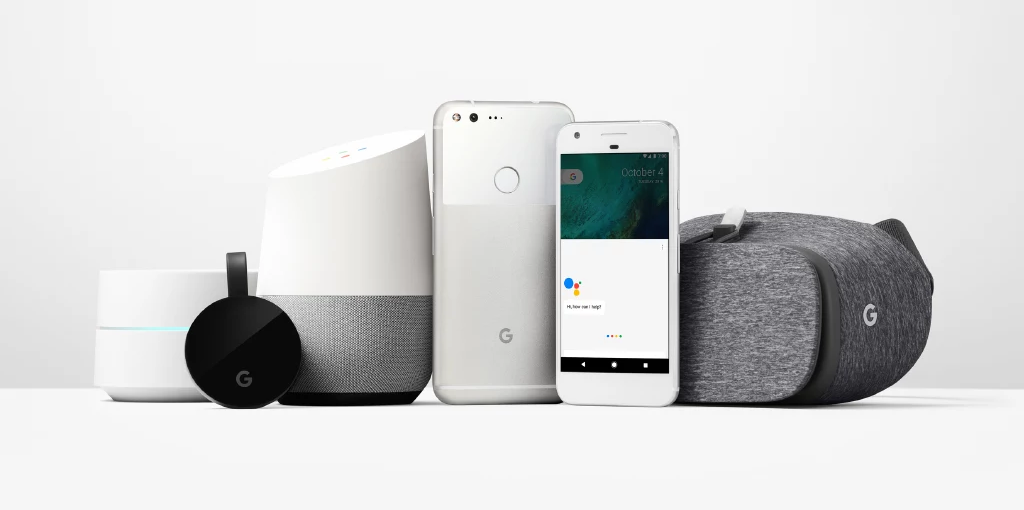
Why Google is so successful, and why you should love it


   The mobile world is so expansive and so competitive.  Cell phones compete against each other, Virtual Reality headsets, routers, mobile streaming and TV devices compete against each other in their own respective realms, and we see most companies sticking to their favorite realms, where they feel they will prosper most.  But Google is different; they don't want to just prosper within their already established realms, but they want to become professionals in every realm.  This is also good to drive competition within certain areas forcing better technology and better prices.  The first example that comes to mind is the Amazon Echo.  Amazon was the first to provide a product like this, and until today, they haven't had any competition, but Google intelligently jumped into the scene less than two years later to create a better assistant for a lower price.  This isn't only good for Google, but it will force Amazon to find ways to lower their cost to consumers, and to be more innovative which benefits consumers and Amazon.  Virtual Reality has been a big thing lately but really the only contenders are the HTC Vive and the Oculus Rift (and arguably the Samsung VR), but all of these options are $200 or more.  Google jumps in within a year to provide a cheaper alternative with comparable quality and range of games.  This, again, will force those in the forefront to lower their cost, provide more content, and a better experience to consumers.
   Apple, Roku, and Amazon Fire TV provided a cable set-top box like experience for mobile content and streaming through their various devices.  These were very simple and the capabilities limited.  Google shortly thereafter makes Android TV which had much more capabilities, integration with mobile devices, and for a lower cost.  Roku and Amazon Fire TV (not Apple) then decided to make comparable devices, and for a lower cost.
   The number of categories Google has dipped its toe into is too numerous for me to discuss here but be aware that it is well over 100.  As you can see Google is doing everything to have a part in every possible way it can, and because of its number of resources it has a shot in succeeding in almost everything it puts its effort into.  You care because you like having better products for a better price.  Whether you prefer Google products, HTC or Samsung products, Google is working on helping you save money and have better products.  When was the last time you saw Apple produce competition to a VR headset, Amazon Echo, Toyota, NASA, or anything that they haven't already been working on for 10 or more years?  Google isn't afraid to get its feet wet, and though not everything that has come from Google has been a marvelous success, the more they try, the more they succeed.  As a friend once told me, it's easier to make $1 million by finding a million ways to make $1 instead of 1 way to make $1 million.

Dear iPhone users, it's time to stop living in the past


   On September 7th, Apple announced the iPhone 7, probably one of the least anticipated iPhones to date.  iPhone users think that Apple has broken new ground and made amazing advancements.  I would have to agree... if it were 2012.  Prior to its release, iPhone 7 was already behind it's competition in every category.  Today (October 4) Google announced their own made phone called Google Pixel.  Less than a month later, Google makes it's first phone without the assistance of companies such as HTC, Huawei, LG, or other companies, and its specifications blow the iPhone out of the water, and for a fraction of the price.  They also know that Apple users are getting tired of the lack of advancements and have included an adapter in every box to help iPhone users switch to the Pixel seamlessly (pictured above.)
   But what about the dual lens camera??  Surely no one has ever done that before!  This is often how blind iPhone users are.  Dual lens cameras have been around for around a decade, but dual lens isn't a necessity for a good camera.  The Samsung S7 scored an 88 on DxOMark standards when the iPhone 7 has an 86, and the Samsung S7 only has one lens.  The newly announced Pixel phone received an 89 on the same DxOMark tests, the highest rating for any smartphone, a score higher than that of $6000 DSLR cameras!  Why can't Apple keep up?
   Devout iPhone users need to have a reality check.  Fact: 8 years ago, Apple was on the forefront of mobile technology and innovation, but that comes in large part due to the fact that they were the first players in the game.  IPhone users need to accept the fact that those who started leading the industry don't always end that way, as is the case with Apple.  For iPhone users who are looking for a still easy-to-use phone with powerful processing abilities, an amazing camera, with a much much better alternative to the sad excuse for an assistant that Apple calls Siri, AND for a fraction of the price, try the Google Pixel, or really ANY Android phone made within the last 3 years.  And don't worry, Google has a better alternative to your iMessages, Apple Music, iTunes, facetime, or anything else that Apple selfishly refuses to make available outside of iOS.  Just Google it.